Localize Your Website into Korean
Reach roughly 52 million Korean speakers in South Korea, one of the world's most digitally advanced and culturally influential markets. Korean uses its own featural alphabet, Hangul, and carries the same kind of layered formality system as Japanese. MotaWord translates directly into South Korean Standard Language with linguists fluent in its specific register conventions.



Korean at a Glance
- Over 52 Million Speakers in South Korea.
- Hangul A Unique Featural Alphabet, Not Shared with Any Other Language.
- Global Cultural Reach Through Korean Entertainment and Consumer Brands.

Market and language snapshot
Reach roughly 52 million Korean speakers in South Korea, one of the world's most digitally advanced and culturally influential markets.
A note on North Korea
North Korea is not a practical or accessible commercial market given sanctions and its restricted internet environment. This page and our translation work focus on South Korean Standard Language, which has also diverged meaningfully from North Korean usage since the peninsula's division.
52M+
speakers in South Korea
Hangul
a unique featural alphabet, not shared with any other language
Global
cultural reach through Korean entertainment and consumer brands
Outsized cultural influence backed by a major digital economy
South Korea's global cultural reach through entertainment and consumer brands translates directly into strong brand receptiveness for well-localized content.
$1.9T GDP
GDP of South Korea, one of the world’s most advanced digital economies.
Top-Ranked
South Korea ranks among the world’s highest for internet speed and smartphone use.
Global Reach
Korean pop culture has built exceptional worldwide brand awareness for Korean products.
Open Access
Standard global platforms and SEO tools all work normally in South Korea.
Cultural and linguistic considerations
Korean localization mistakes tend to come from misjudging formality level or missing the North/South vocabulary divergence.
- Formality carries real social weight: Korean has multiple speech levels depending on the relationship and context between speaker and audience. Commercial content generally uses a polite, formal register by default.
- North and South Korean have diverged significantly: Decades of separation produced real vocabulary differences, with South Korean absorbing far more English loanwords. Always translate for South Korean usage unless specifically told otherwise.
- Hangul needs proper font support: It's a featural alphabet where letter shapes reflect articulation, visually distinct from Chinese or Japanese characters despite regional proximity. Don't assume CJK font support automatically covers it well.
- Trust and detail matter for conversion: Like Japan, Korean consumers tend to respond well to detailed, substantiated product information over broad marketing claims.
What Korean localization does for search and reach
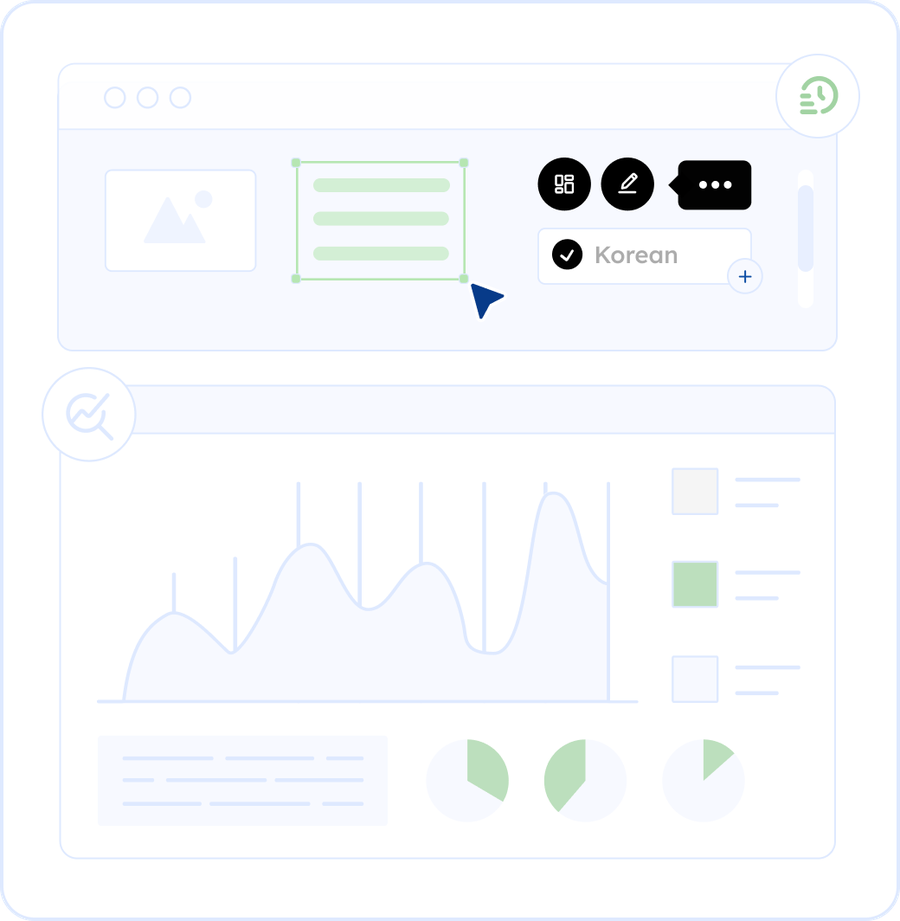
South Korea has a genuinely distinct search landscape worth planning around.

Naver alongside Google
Naver is South Korea's dominant local search engine and often outperforms Google for domestic queries. A Korean SEO strategy usually needs to account for both.

Hreflang
Ko-KR is the standard hreflang tag for South Korean content, making sure search engines serve the right version to domestic users and the Korean diaspora abroad.

KakaoTalk as a channel
KakaoTalk is the dominant messaging and commerce platform in South Korea, and it often works alongside your standalone website as a key channel for reaching local users.

Character encoding
Proper UTF-8 handling for Hangul in URLs, meta tags, and titles avoids rendering and search indexing issues that can quietly hurt visibility in Korean results.
What Sets Our Korean Localization Apart
-
Native South Korean linguists:
Translators fluent in current South Korean usage and the appropriate formality register for your content.
-
Naver and Google SEO awareness:
We factor both search engines into keyword and technical SEO guidance.
-
MotaWord Active:
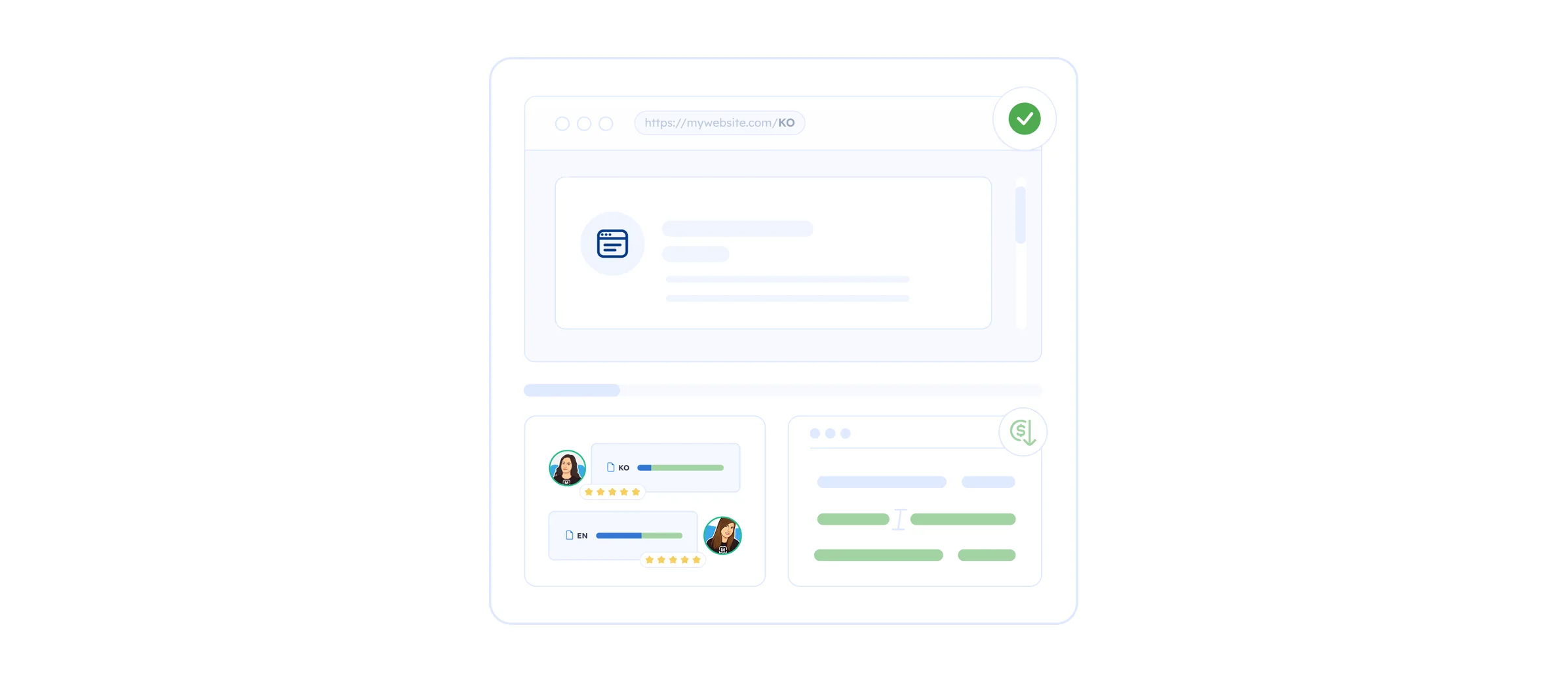
AI makes your website multilingual instantly. Discounted professional translation is available as an optional add-on when you want human review on the pages that matter most.
-
12- to 24-hour turnaround:
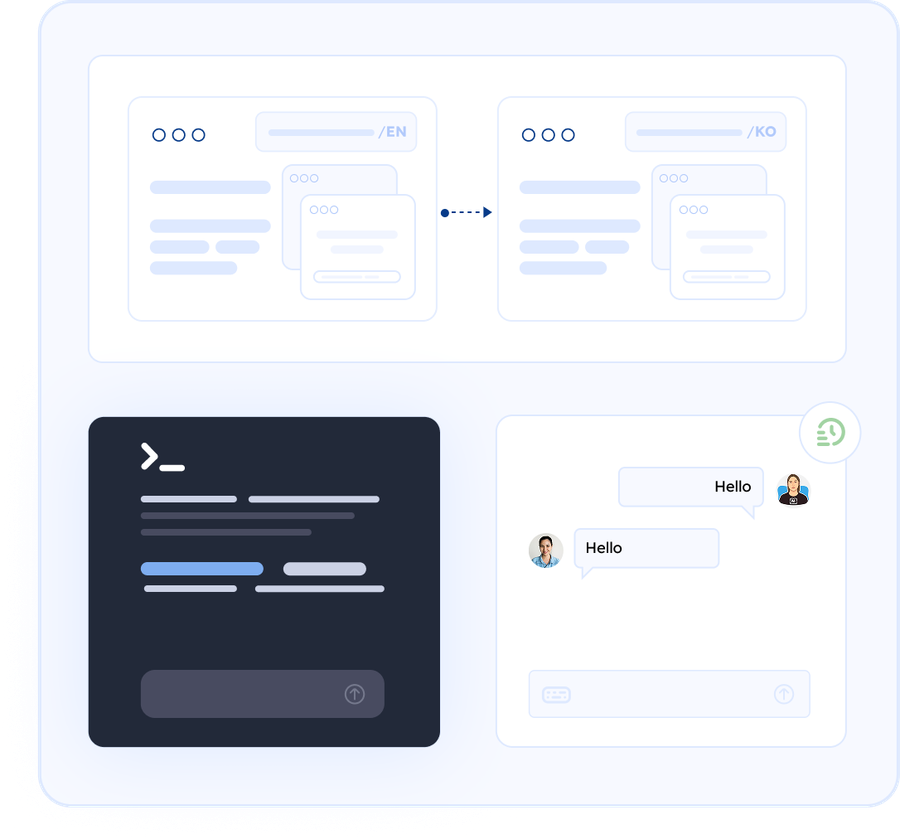
Our collaborative translation model gets full-site projects done in hours, not the weeks a traditional agency needs.
-
24/7 live support:
Direct access to your project team throughout, with no ticket queue.
Need Korean beyond your website?
MotaWord supports Korean beyond website localization, from official document translation to live interpretation.
- Certified Korean translation: Live on site. USCIS-accepted certified translation for birth certificates, diplomas, transcripts, and other official Korean documents. View certified translation →
- On-site Korean interpretation: In-person interpreters for legal proceedings, medical appointments, school meetings, and business events. on-site interpretation services
- Video and phone Korean interpretation: On-demand VRI and OPI interpreters for remote Korean-language support, available 24/7. on-site vs VRI vs OPI interpretation
Translating and localizing a website into Korean
Not sure where to start?
Tell us about your site in the chat. Answer one quick question and we'll point you to the right next step.
Both, generally. Naver often drives more domestic search traffic in South Korea than Google, so a Korean SEO strategy usually needs to account for its specific ranking factors.
A standard polite, formal register is the safe default for most commercial content, similar to the convention in Japanese.
The cost of translating a website with MotaWord depends on the workflow you choose. For file-based website localization, you send us the text, pages, or strings you want translated, and pricing is based mainly on word count and project scope. If you want a more complete website workflow, MotaWord Active runs on a subscription matched to your site. Active makes your website multilingual instantly with AI, includes multilingual SEO support, ongoing content updates, a no-code workflow, and 24/7 live support. If you want human review, discounted professional translation is available as an optional add-on.
With MotaWord Active, your website can be localized into Korean in minutes. Full-site professional translation projects are done in hours, not the weeks a traditional agency needs.
Yes. MotaWord Active makes your website multilingual instantly, and discounted professional translation is available as an optional add-on when you want human review on the pages that matter most.
No. MotaWord Active translates your site without any coding, and we also offer plugins and integrations for platforms such as WordPress and Drupal. See how MotaWord Active works.